
Diverting Paths, Building Bridges and Making Way for Bison
1st September 2026
A guest blog written by Emma Charlesworth
Who would have thought that when I applied for the job as a Public Rights of Way Officer I’d be diverting footpaths in a woodland in Kent for the introduction of bison as part of a unique and first of its kind wilding project. And yet here we are, awaiting work to be completed on the construction of four “bison bridges” in West Blean and Thornden Woods, which will help give people aerial views of the country’s first free-roaming bison herd for thousands of years.
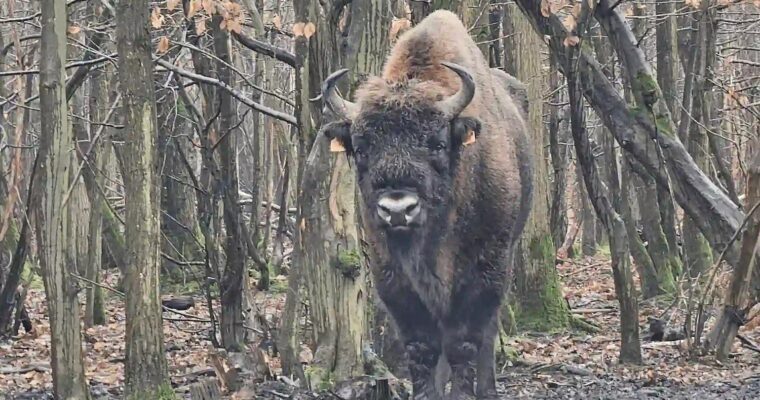
Three female bison were released into countryside near Canterbury, Kent in July 2022, and later joined by a bull and now two baby bison. The bison herd are a first for the UK, but across Europe bison are already being used by several countries to manage and enhance habitats. On top of this the wilding project, jointly headed by Kent Wildlife Trust and the Woodland Trust, have also introduced Iron Age Pigs, Exmoor ponies and longhorn cattle into the area. According to Kent Wildlife Trust’s Wilder Blean web page, the presence of the bison and other animals will “transform the woods into a lush, thriving, biodiverse environment”.
So what is “wilding”? It’s a nature based solution to deliver greater diversity and abundance of wildlife, and using the right “ecosystem engineer” species to improve habitats naturally. Why bison? The success of projects using bison in the Netherlands have shown dramatic improvement to habitats there, with the bison now being dubbed these “ecosystem engineers”. Here in the UK, our traditional conservation approaches haven’t halted the decline in rich biodiverse habitats, and Kent Wildlife Trust believe that a bolder approach is needed. They have learnt from the success of similar projects, where habitats have been dramatically improved with the introduction of the bison.
While we in the UK may be familiar with loose cattle, pigs and ponies, bison are a whole different kettle of fish (or Bovidae to use the proper scientific classification of cloven-hoofed mammals). With a lifespan of approximately 20 years, adult weight of 900kg and the ability to run up to 35 mph, they are subject to the Dangerous Wild Animal Act 1976. The purpose of the act is to ensure that those who keep wild animals do so in a way that minimises the risk to the public. This poses problems when you factor in the numerous public footpaths that criss-cross the beautiful area of Blean, and the wildlife trust were left with the issue of allowing the public to exercise their rights while giving the bison the opportunity to freely choose where they graze.
The solution? Bison bridges or tunnels! The tunnels allow the bison to be able to roam freely across the full 500 acres of Blean woodland, and where a footpath crosses the woodland, a bridge will carry users up and over, keeping them safe from the herd. Additionally, the public may be able to catch a glimpse of the animals from the unique vantage point at the top.
Working closely with the Kent County Council (KCC) Public Rights of Way Team, the Wildlife Trust applied for planning permission under the Town and Country Planning Act to install four bridges and to divert the public footpaths CH1, CH2, CH4 and CH67 in four separate areas of woodland. In addition to the four separate diversion Orders, we also entered into a Maintenance Agreement with the Trust over the upkeep and maintenance of the bridge structures. These four bridges are specialist in design, quite unlike anything we have elsewhere on the network, and as such it was felt that the Wildlife Trust should be responsible for costs involved in the maintenance.
Each bridge takes approximately 6 weeks to build, at a cost of approximately £250,000 each. Much of this has been paid for by a number of public bodies and private investors. Unfortunately, works on 2 of the bridges had been delayed until late summer 2026, due to the discovery of a rare moth which is hibernating in the area the bridges are to be built, but works on the other two have been completed.
The project has already won three national awards: The Big Biodiversity Challenge, a National Sustainability Award and a Global Good Award and the team have further plans to connect the Blean landscape to create wildlife corridors across Canterbury, working with the RSPB and Woodland Trust. The project is also the inspiration for a children’s book, The Bison and the Butterfly, by author Alice Hemmings.
Kent Wildlife Trust hope that, by working in collaboration and addressing the needs of wildlife and people, they can create an iconic landscape and a sustainable, long-term future for the Blean.
To find out more about the project, you can visit the Wilder Blean webpage at https://www.kentwildlifetrust.org.uk/projects/wilder-blean
To plan a walk through this fascinating area of Kent, to visit the bridges and, if you’re lucky, sight of the wild Bison. you can use KCC’s interactive PRoW map by searching on the path numbers CH1, CH2, CH4 or CH67.
Want to see how the bison use the bridges? Watch the video below.
Popular articles
Walking the Pilgrims Way
Experience the beauty of walking across the Kent Downs NL through the…
Pumpkin Picking in Kent 2024
Get ready for pumpkin picking season and head out with loved ones…
Explore Kent’s Scenic Walks by Train
Discover Kent's hidden gems hassle-free by train, where you can start walking…